The Baan War: A Legacy of Heritage, Displacement, and Survival
The Baan War of the 16th century was a defining event in the history of Zaakpon and its surrounding communities. This war, which began as a struggle to preserve the cultural and spiritual heritage of Zaakpon, reshaped the region’s sociopolitical landscape and caused the displacement of numerous villages. At its heart, the conflict revolved around the defense of “Beka,” a revered goddess of Zaakpon, and the preservation of the community’s sacred traditions.
The Exit
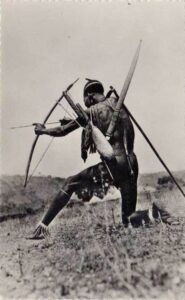
Zaakpon, a vassal of the Bewa (Boue) Kingdom, found itself under siege by the invading Baan forces. The war was not just a physical struggle but a spiritual and cultural battle as well. Zaakpon’s heritage was safeguarded by the bravery of allied forces, including Gbenekiri and the Yor Boue (god of Boue), a powerful goddess from Finima. These forces played a pivotal role in rescuing Zaakpon from the grasp of the Baan invaders. However, the devastation of the war left deep scars, displacing entire communities and forcing them to seek refuge elsewhere.
The Exodus: A Journey of Survival
The Baan War forced the people of ancient Bori village (Ka-Bori) to flee their homeland in search of safety. Before their departure, the villagers performed a solemn ritual that underscored their deep connection to their ancestral land. They gathered at the sacred spot of their community, collected soil as a symbol of their roots, and purchased an illicit drink for use in their rituals. This was presented to Gbeneakpa, the revered juju of Kaani, as a pledge of faith and loyalty.
The villagers declared their intention to leave Ka-Bori, entrusting their land and properties to Gbeneakpa. They vowed to return after the war ended, either to reclaim their homeland themselves or through their descendants. This act of faith reflected their unwavering belief in their heritage and their hope for a better future.

Led by GbeneGbosi, a descendant of Gbenekiri, the people of Bori embarked on a perilous journey to Yeghe. Their migration, much like the biblical exodus of the Israelites to Egypt during a great famine, was a quest for survival. The war had stripped them of their safety, but their resilience and determination to preserve their heritage guided them forward.
Settling in Yeghe: A New Chapter
Upon arriving in Yeghe, the displaced Bori people sought to rebuild their lives. Conscious of their status as strangers in a new land, they made every effort to maintain peace and harmony with their hosts. They understood that their survival depended on their ability to integrate into Yeghe society while preserving their unique identity.
During their time in Yeghe, GbeneGbosi and his family played a central role in the community. GbeneGbosi had children, including Kip and others, who would continue the legacy of the Bori people. Kip grew up in Yeghe, where he married Perewa, a woman from Yeghe known for her family’s prominence. Their union produced eight children: four sons—Ledogo, Gbarazia, Dinee, and Neebee—and four daughters, including Nwaawii and Bariwa, with the names of the other two lost to history.
Although the war had ended, the Bori people did not return permanently to their homeland. Instead, they maintained a connection to Ka-Bori by visiting occasionally. During these visits, they cultivated the land and shared farm plots with their Yeghe brethren. These acts of generosity were gestures of goodwill, strengthening the bond between the two communities.
Cultural Integration and Contribution
Over time, the descendants of GbeneGbosi fully assimilated into Yeghe society. They learned the language, adopted local names, and participated in cultural and traditional practices. Their integration was so complete that they even joined prominent sociocultural groups such as Amanikpo, Zimko, Pogobere, Kpaakpaa, and Nneenaale.
One of Kip’s sons, Neebee, became a prominent figure in Yeghe society. As a member of the Nneenaale cultural group—a powerful organization that influenced the sociopolitical affairs of Yeghe—Neebee served as an errand boy and messenger. He worked tirelessly, believing he was fulfilling his duty as a loyal son of Yeghe. His dedication exemplified the Bori people’s commitment to their adopted homeland, even as they faced the challenges of assimilation and identity preservation.
The Forgotten Sacrifices
Despite their contributions to Yeghe society, the sacrifices and generosity of the Bori people were gradually forgotten. Over time, the goodwill that had defined the relationship between the two communities eroded. The Yeghe people began to oppress and exploit the descendants of Bori, seizing farm plots that had once been shared in friendship.
This betrayal was a painful reminder of the fragility of human memory and the consequences of neglecting history. The descendants of GbeneGbosi, who had worked so hard to integrate into Yeghe society, found themselves marginalized and dispossessed.
The Legacy of Resilience
Despite these challenges, the descendants of the Bori people continued to persevere. They adapted to their circumstances, finding ways to thrive in a society that had turned against them. Their story is a testament to the enduring human spirit and the importance of resilience in the face of adversity.
The migration and integration of the Bori people offer valuable lessons about the dynamics of displacement, assimilation, and cultural preservation. Their journey underscores the importance of remembering and honoring the contributions of those who came before us.
Themes and Reflections
The story of the Baan War and the subsequent migration of the Bori people is rich with themes of resilience, cultural preservation, and the struggle for identity. It highlights the sacrifices made to protect one’s heritage and the challenges of building a new life in a foreign land.
The erasure of the Bori people’s contributions serves as a cautionary tale about the dangers of forgetting history. Acts of kindness and cooperation should be celebrated, not forgotten, as they form the foundation of strong and harmonious communities.
A Closer Look at Neebee’s Journey
Neebee’s story is a microcosm of the larger narrative of the Bori people. His unwavering dedication to the Nneenaale cultural group reflected his desire to belong and contribute to Yeghe society. However, his efforts were met with ingratitude, mirroring the broader rejection faced by his community.
Neebee’s life serves as a reminder of the complexities of identity and belonging. It illustrates the challenges of navigating cultural integration while preserving one’s heritage.
Sociological and Psychological Insights
The story of the Bori people provides valuable insights into the sociological dynamics of displacement and assimilation. Their journey demonstrates the importance of cultural resilience and the ways in which displaced communities adapt to new environments.
Psychologically, the Bori people’s ability to persevere in the face of adversity underscores the strength of the human spirit. Their story highlights the importance of hope and determination in overcoming challenges.
Conclusion
The story of the Baan War and the migration of the Bori people is not just a historical account—it is a testament to the strength of heritage and the enduring quest for identity. It reminds us of the sacrifices made to preserve cultural traditions and the importance of honoring those who came before us.
As we reflect on this history, let us strive to build societies that celebrate diversity and remember the contributions of all communities. The legacy of the Bori people is a powerful reminder of the resilience of the human spirit and the enduring importance of cultural preservation.
This account is based on true events, as evidenced by interactions with the grandchildren and great-grandchildren of the individuals mentioned.
The Return
During their time in Yeghe, a man named Naagbo Nkiri rose to prominence. Although not a chief or king, Naagbo Nkiri was a man of authority and renown. He commanded respect, acting as a government and jury unto himself. His influence extended far and wide, as he recruited able-bodied men to serve under him. These men acted as enforcers of the law, similar to the court officers of old, handling arrests, investigations, and other legal matters. Naagbo Nkiri even maintained dungeons where he incarcerated both men and women found guilty of offenses after due investigation.
At the time, the Nneenaale cultural group was one of the dominant forces in Yeghe, wielding significant sociopolitical influence. Among their trusted aides was Nneebee Kip, the messenger of the group and a descendant of the displaced Bori people. Nneebee’s role was critical, as he carried out tasks essential to the group’s operations, bridging the gap between them and the broader Yeghe community.
The Compound of Gborodae
The Bori people, beginning with GbeneGbosi, had settled in the compound of a prominent Yeghe man named Gborodae. This compound became their home for generations. Gborodae, who had two wives, faced persistent domestic unrest, as the two women were often at odds with one another. Their constant quarreling disrupted the peace of the household.
To resolve the issue, Gborodae reported the matter to the Kpaakpaa cultural group, a respected body known for maintaining order. The group intervened, summoning the two women and instructing them to maintain peace in the household. To enforce this mandate, they decreed that any further quarreling would result in a fine of a goat, along with all the necessary condiments for a communal meal. This strict measure brought a semblance of order to the household.
A Clash of Groups
Nearby, an area under the control of the Nneenaale cultural group was marked with a long stick, signaling that the path was restricted and off-limits to the public. Unfortunately, two young children, unaware of the restriction, crossed the line while playing. These children happened to be Nneebee Kip’s own.
When the Nneenaale cultural group learned of the incident, they expected Nneebee to demand the customary fines from the parents of the children. However, to their surprise, Nneebee refused, likely out of loyalty to his community and an unwillingness to impose further hardship on his people.
The group, angered by Nneebee’s defiance, took matters into their own hands. They stormed the compound where the Bori people resided, attacking everyone in sight in an attempt to enforce their demands. This act of aggression disrupted the fragile peace maintained in the community and drew the attention of the Kpaakpaa cultural group.
The Kpaakpaa group, responsible for overseeing peace in Gborodae’s compound, rose to defend the Bori people. They condemned the actions of the Nneenaale group and took the matter to Naagbo Nkiri, the respected arbitrator.
The Trial
Naagbo Nkiri summoned both the Kpaakpaa and Nneenaale groups to appear before him. While the Kpaakpaa group complied, the Nneenaale group refused, further escalating tensions. In response, Naagbo Nkiri ordered his men to arrest members of the Nneenaale group wherever they were found in the community.
The arrests began in earnest, with each detained member required to pay fines that included guineas, a goat, a jar of palm wine, and a basin of yams. Those unable to pay were kept in prison until the fines were met. This enforcement continued for some time before the case was officially heard.
The trial lasted nearly three years, during which Naagbo Nkiri conducted thorough investigations and collected evidence. In his final judgment, he ruled in favor of the Kpaakpaa cultural group, finding the Nneenaale group and Gborodae’s family guilty of disrupting the peace of Yeghe. The guilty parties were ordered to pay substantial fines in both cash and materials to atone for their actions and prevent further unrest.
The Breaking Point
The judgment did not sit well with Gborodae’s family. They blamed the Bori people for their predicament, accusing them of bringing trouble and financial losses upon the household. This resentment festered, leading to murmurs and cold hostility toward the Bori community.
In secret, Gborodae’s family invoked malevolent spirits against the Bori people. Within six months of the trial’s conclusion, tragedy struck the Bori community. A young child died under mysterious circumstances, followed shortly by the death of another child without any apparent illness.
Alarmed, the Bori people sought answers. They consulted an oracle in Zaakpon, who revealed that the deaths were caused by juju invoked by members of Gborodae’s household. The oracle also disclosed that the Yeghe community no longer saw the Bori people as their own and wished for their departure. This revelation left the Bori people with no choice but to leave Yeghe.
The Return to Ka-Bori
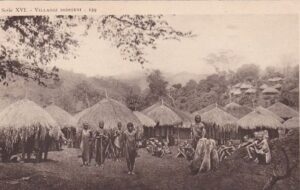
In haste, the Bori people gathered their belongings and returned to Ka-Bori, the land of their ancestors. However, what they found upon their return was desolation. There were no homes or shelters, and they were forced to live under trees and shrubs. Despite these harsh conditions, their determination to rebuild their lives remained unshaken.
For two years, they lived in makeshift shelters while constructing new homes. Slowly but surely, they began to reclaim their ancestral land. During this time, the ancestral spirit of the Bori people manifested through a young boy named Eebeegbo, the son of Ledogo Kip, who was born out of wedlock.
Through Eebeegbo, the spirit revealed a critical step that their forefathers had taken during the Baan War. The Bori people were instructed to return to Kaani and seek the favor of Gbeneakpa, the juju of Kaani. By performing the necessary rituals and pledging their loyalty, they would secure peace and protection in their homeland.
Following the guidance of the ancestral spirit, the Bori people journeyed to Kaani and carried out the rituals as instructed. This act marked the beginning of a new chapter for the Bori people, allowing them to live peacefully in their ancestral land once more.
A Distinct Identity
The return of the Bori people to Ka-Bori was not just a physical journey but a reaffirmation of their identity. Their separation from Yeghe became a defining moment, solidifying their distinct cultural and historical legacy.
To this day, Bori stands apart from Yeghe—a testament to the resilience and strength of its people. Their story serves as a reminder of the enduring power of heritage and the sacrifices made to preserve it.
Bori is distinct from Yeghe. They know it, and we know it.